Aging in Place Is What Older Adults Want. Here's What Stands in the Way (2026)
75% of adults 50+ want to stay in their homes as they age. The numbers on who's providing the care, what it costs, and where we think aging in place is heading.

· 7 min read
The short version
- Three in four adults 50 and older want to stay in their own home for as long as possible (AARP, 2024).
- About 16 million older Americans live alone, and the 65+ population has grown 16% in five years to 64.6 million.
- Families do most of the work: 63 million Americans are family caregivers, up 45% in a decade, giving an average of 27 hours a week.
- Paid help is expensive to buy and hard to find: families pay a median $35 an hour for in-home care through an agency, the aides doing the work earn about $17 an hour, and the country needs to fill an estimated 9.6 million direct care job openings by 2035.
- Our view: more of aging will happen at home, families will stay at the center of it, and the best technology will fill the small gaps between the people who care, not try to replace them.

I'm not a caregiving expert. I'm a guy who started building something for his grandpa and ended up spending most of my days talking with families who are trying to help a parent stay in the home they love. The more of those conversations I have, the more I wanted to understand the bigger picture. So I went and read the reports. Here's what the numbers say, and where David and I think this is all heading.
Do older adults really want to stay in their homes?
Yes, and by a wide margin. In AARP's 2024 Home and Community Preferences Survey, 75% of adults 50 and older said they want to stay in their current home for as long as possible, and 73% said the same about their community. AARP has run this survey for years, and that answer has barely moved.
That matches every conversation I've had. Nobody's parent says "I can't wait to move." Home is where the routines are: the chair, the porch, the neighbors, the TV that's already set to the right channel. My grandpa's house is where the Tigers are on.
How many older adults are living alone?
About 28% of older adults living in the community live alone. That's 16.2 million people, including 42% of women 75 and older, according to the federal Administration for Community Living.
And the group is growing fast. The Census Bureau counted 64.6 million Americans 65 and older in mid-2025, up 16% since 2020. By 2030 every baby boomer will be older than 65, and the Census Bureau's latest projections have older adults outnumbering children by 2029.
So more people want to stay home, more of them are doing it alone, and there are more of them every year.
Who is actually providing the care?
Mostly family. AARP and the National Alliance for Caregiving count 63 million family caregivers in the U.S. in 2025, almost one in four adults, up 45% since 2015. On average they give 27 hours a week, and six in ten also hold a job.
Some other numbers from that report that stuck with me:
- Nearly two-thirds of caregivers report moderate or high emotional stress.
- About half have taken a financial hit from caregiving.
- Half of working caregivers have had to come in late, leave early, or take time off.
- About one in four say they feel alone.
- More than one in ten live an hour or more away from the person they care for.
AARP puts the value of all that unpaid care at $1.01 trillion a year, more than total Medicaid spending. I've watched my mom do this job for years. She's incredible at it, and it is a job.
Why can't families just hire more help?
Because paid care is expensive to buy, hard to find, and doesn't pay the people doing it very well. Families pay a median $35 an hour for a non-medical in-home caregiver through an agency, according to CareScout's 2025 Cost of Care Survey. The aide doing that work earns a median of $17.21 an hour, according to the Bureau of Labor Statistics. Both numbers are part of the problem.
Those two figures describe the same hour of care from two sides. The $35 is what the agency bills the family. The $17 is what the aide is paid. The difference covers payroll taxes, workers' compensation, insurance, training, scheduling, backup coverage when someone calls in sick, and the agency's margin. Hiring someone directly lands in between: independent caregivers listed on Care.com ask an average of about $21.60 an hour nationally, but then you're the employer, handling payroll, taxes, and finding your own backup.
At 44 hours a week, the agency rate works out to about $80,000 a year. Assisted living runs a median $6,200 a month.
On the workforce side, PHI reports that direct care is now the largest workforce in the country at nearly 5.8 million workers, and it still isn't enough. PHI estimates 9.6 million direct care job openings between 2025 and 2035. With median pay of $17 to $18 an hour (PHI puts it at $17.99 across all direct care, BLS at $17.21 for home health and personal care aides), it isn't hard to see why agencies struggle to hire and keep people.
So even families who can afford help can't always find it, and nobody can afford to have a paid caregiver there every hour of the day.
What falls through the cracks?
When family time and paid hours are both stretched thin, they go to the essentials: health, safety, money, meals. What gets squeezed out is the small, human stuff, and a lot of plain quiet hours.
That's the right way to prioritize. But the small stuff is a big part of what makes staying home worth it. The show they love. Knowing when their team plays. Someone asking how lunch with a friend went. The National Academies estimated that about one in four Americans 65 and older living in the community is socially isolated, and the U.S. Surgeon General's 2023 advisory lays out how seriously isolation affects people's health.
The way I think about it, families work incredibly hard to make sure a parent can get by at home. The more ambiguous question is what helps them actually enjoy their days there. I don't think anyone has a perfect answer, and if you feel stuck on it, you're in very good company.
Where is aging in place heading?
We think more of aging will happen at home, families will stay at the center of it, and the most useful technology will be the kind that fits into what older adults already do, filling small gaps between the people who care for them. A few things David and I believe:
- Home is winning. It's what people want, and at $6,200 a month for assisted living, it's often what families can manage.
- Families will keep carrying most of it. The math on the paid workforce doesn't change that any time soon. So the most valuable tools will be the ones that give family caregivers something back without adding to their to-do list.
- Human hours should go to what only humans can do. Hands-on care, a visit, a hug, a long talk with your daughter. Technology should take the things that slip, not the things that matter most.
- The best technology for older adults will meet them where they are. Pew found that 95% of adults 65 and older own a cellphone, but only 78% own a smartphone, and CDC data shows roughly a third still have a landline. Nearly everyone has a phone and knows how to answer it. That's a much better starting point than a new gadget to learn.
- The goal moves from getting by to living well. Once the essentials are covered, the next question is quality of life, and I think that's where a lot of the good work in this space will happen over the next decade.
Where Donna fits
This is why we built Donna the way we did. She calls your parent on the phone they already have for a friendly chat and the reminders you set (the game at 7, mahjong at 10), then sends you a short recap. She's one extra touchpoint in the day, for the quiet stretches when family and caregivers can't be there. She doesn't replace any of the people in this article. The hope is that she takes a few of the small things off the list of what gets missed. If you're curious, here's the story of why we built her.
Sources
Each figure was checked against the original report on October 1, 2026 (wage figures October 3):
- AARP, 2024 Home and Community Preferences Survey (75% home, 73% community)
- Administration for Community Living, 2023 Profile of Older Americans (28% and 16.2 million living alone; 42% of women 75+)
- U.S. Census Bureau, Vintage 2025 population estimates (64.6 million aged 65+, up 16.2% since 2020)
- U.S. Census Bureau, 2018 (all baby boomers older than 65 by 2030) and 2023 National Population Projections (older adults surpass children in 2029)
- AARP and National Alliance for Caregiving, Caregiving in the US 2025 (63 million caregivers, 45% growth, 27 hours a week, employment, stress, distance)
- AARP, Valuing the Invaluable 2026 ($1.01 trillion, 49.5 billion hours, comparison to Medicaid)
- CareScout 2025 Cost of Care Survey ($35 an hour agency rate, $80,080 a year, $6,200 a month assisted living)
- U.S. Bureau of Labor Statistics, Occupational Outlook Handbook: Home Health and Personal Care Aides (median pay $17.21 an hour, $35,800 a year, May 2025; 18% projected growth 2025 to 2035)
- Care.com senior care cost data (national average of $21.60 an hour as of October 2026, based on rates reported by providers listed on Care.com)
- PHI, Direct Care Workers in the United States: Key Facts 2026 (5.8 million workers, 9.6 million openings, $17.99 median wage)
- National Academies, Social Isolation and Loneliness in Older Adults (2020) (24% of adults 65+ socially isolated)
- U.S. Surgeon General, Our Epidemic of Loneliness and Isolation (2023)
- Pew Research Center, Mobile Fact Sheet (November 2025) (95% of adults 65+ own a cellphone, 78% a smartphone)
- CDC/NCHS, Wireless Substitution, July to December 2025 (landline figures for adults 65+)
Frequently asked questions
What percentage of older adults want to age in place?
75% of U.S. adults 50 and older want to stay in their current home for as long as possible, and 73% want to stay in their community, according to AARP's 2024 Home and Community Preferences Survey.
How many family caregivers are there in the United States?
63 million American adults were family caregivers in 2025, almost one in four adults and a 45% increase since 2015, according to AARP and the National Alliance for Caregiving's Caregiving in the US 2025 report.
How many seniors live alone in the U.S.?
About 16.2 million older adults living in the community, or 28%, lived alone in 2023, according to the Administration for Community Living. Among women 75 and older, 42% lived alone.
How much does in-home care cost in 2026?
The most recent national median is $35 an hour for a non-medical in-home caregiver hired through an agency, about $80,080 a year at 44 hours a week, from CareScout's 2025 Cost of Care Survey (released March 2026). Independent caregivers listed on Care.com ask an average of about $21.60 an hour. Assisted living has a national median of $6,200 a month.
Why does home care cost $35 an hour when caregivers earn about $17?
The $35 is the agency's rate to the family; the $17 is the aide's wage. The gap covers payroll taxes, workers' compensation, insurance, training, scheduling, backup coverage, and the agency's margin. Families who hire a caregiver directly pay less per hour but take on those employer responsibilities themselves.
Is there a shortage of home care workers?
Yes. PHI estimates 9.6 million direct care job openings from 2025 to 2035, including nearly 6.2 million in home care. Median pay is $17.99 an hour across direct care (PHI) and $17.21 for home health and personal care aides (BLS, May 2025).
How much is unpaid family caregiving worth?
AARP's Valuing the Invaluable 2026 report estimates family caregivers provided 49.5 billion hours of care in 2024, worth about $1.01 trillion.
Keep reading

Why We Built Donna: My Grandpa, the Detroit Tigers, and the Small Things That Slip
Donna started as Tigers game reminders for my grandpa. Here's why my co-founder David and I built an over-the-phone assistant for older adults, and what it's for.
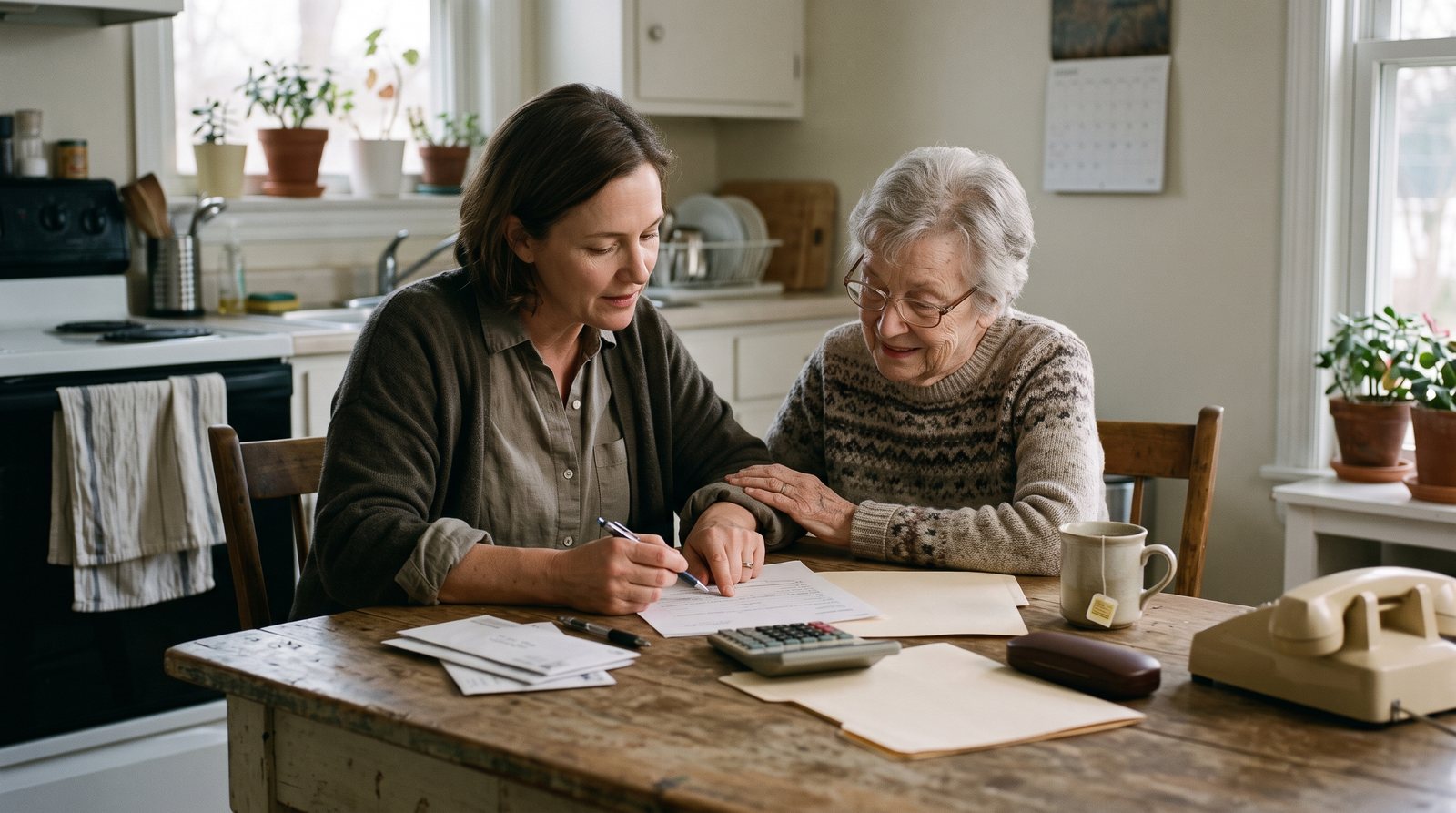
How to Get Paid to Be a Caregiver for Your Mom or Dad (2026 Guide)
Yes, you can get paid to care for a parent. Every state has a Medicaid program that pays family caregivers, and there are veteran, insurance, leave, and tax routes too. How each works, what it pays, and how to start.

Donna on the Good Neighbor Podcast: North Dallas
I joined Sophia Yvette on the Good Neighbor Podcast: North Dallas (Ep. 625) to talk about my grandpa, the Tigers, who Donna is really for, and what's new. Watch, listen, and read the highlights.